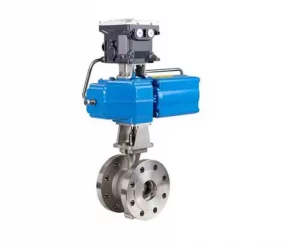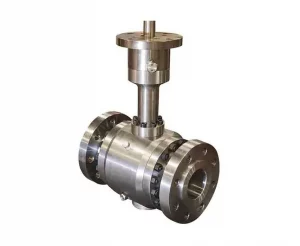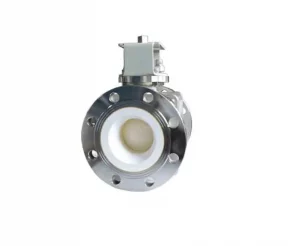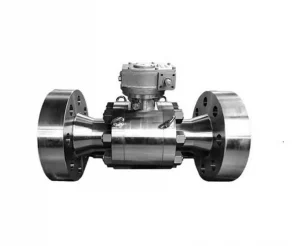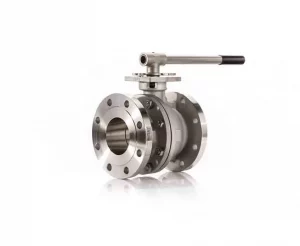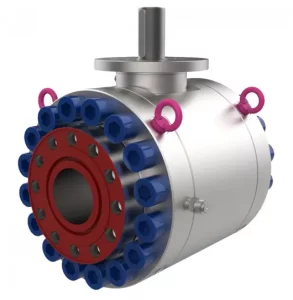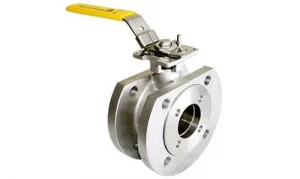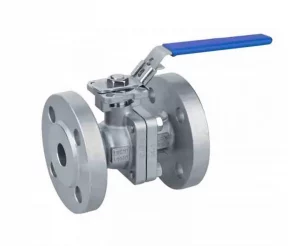

PTFE Coated Ball Valve is a type of valve coated with a special material commonly known as PTFE (polytetrafluoroethylene) or Teflon.
PTFE is characterized by its chemical resistance, low coefficient of friction, and high-temperature resistance. These valves operate based on typical ball valve principles; that is, they allow flow when open and block flow when closed.
The PTFE coating covers the inner part of the valve, providing resistance to wear and chemical protection. PTFE coated ball valves are typically used in chemical processes, the petrochemical industry, and applications involving acids and aggressive chemical substances.
Additionally, thanks to the PTFE coating, the interior of the valve has a smooth surface, allowing for more effective fluid control.
Due to these properties, PTFE coated ball valves are particularly preferred in industrial applications requiring chemical resistance and low friction.
PTFE Teflon Coated Ball Valves can be produced as floating, trunnion-mounted, full bore, or reduced bore designs in two- or three-piece configurations.
The design standard includes EN-12516, ISO 17292, ANSI B16.34, and API 6D, while face-to-face standards are EN 558, ANSI B16.10, or custom dimensions based on specific requests.
For flange connections, we comply with standards such as EN 1092-1 & EN 1092-2, ANSI B16.5, and B16.47.
The connection standard for the top flange of the valve is ISO 5211. Our products can be inspected according to international standards like API 598, ANSI FCI 70-2, and ISO 5208.
Upon request, our products can be delivered with Class C leakage sealing or Class A zero-leakage sealing. Fire safety is ensured through designs meeting API 607, API 6FA, and ISO 10497 standards.